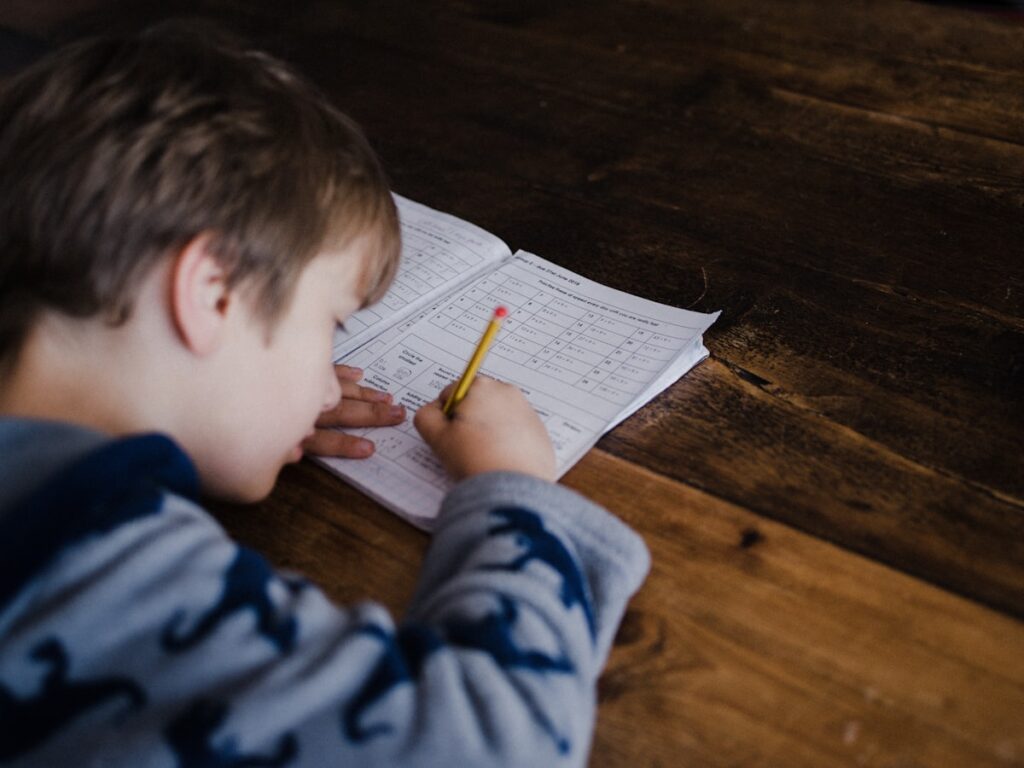
If your child is preparing for a grammar school place and you have just met verbal and non-verbal reasoning for the first time, it can feel like a strange, secret subject nobody taught you at school. The good news is that you can absolutely help at home, and these 11 plus reasoning tips are built around short, calm, playful practice rather than cramming. Reasoning is a skill your child gets better at with regular, low-pressure exposure, and a lot of that can happen at the kitchen table.

What verbal and non-verbal reasoning actually test
It helps to know what you are dealing with before you start. Verbal reasoning is word based logic. It asks your child to work with letters and words in ways their normal schoolwork rarely does: cracking letter codes, spotting sequences, finding analogies, sorting words into groups, and solving little logic puzzles written in language. Non-verbal reasoning takes that same careful thinking and moves it to shapes and patterns instead of words: which shape comes next in a series, which one is the odd one out, how a shape has been rotated or reflected.
Neither of these tests facts your child has not met. There is no syllabus of dates or formulas to memorise. Both reward a child who slows down, reads the question properly, and thinks in an organised way. That is genuinely good news, because it means the skill is coachable at home.
Start with vocabulary and reading, the quiet foundation
Before any clever technique, verbal reasoning rests on vocabulary. A child who knows more words finds synonyms, antonyms and analogies far easier, because the answer is already familiar. The single most useful thing you can do, long before you buy a single practice book, is keep your child reading widely and talking about the words they meet. Ten to fifteen minutes of reading a day, a mix of fiction and non-fiction, quietly builds the exact word knowledge the verbal papers lean on.
Make it a habit to notice interesting words together, ask what they think a word means from its context, then check it. This costs nothing and it compounds. It is also one of the things my team keeps ticking over between lessons, so that vocabulary building does not depend on one big weekly push.
My top 11 plus reasoning tips for helping at home
Here is where most of the progress comes from. These are the 11 plus reasoning tips I give parents most often.
- Little and often beats a long Sunday session. Fifteen focused minutes on a school night, most days, does more than two exhausting hours at the weekend. A ten year old’s concentration is a limited resource, so spend it in short bursts.
- Make it a game, not a test. Puzzle books, word games in the car, spot the pattern on wallpaper or tiles, code cracking on the back of an envelope. When it feels like play, your child practises more and dreads it less.
- Teach one question type at a time. Do not throw a full mixed paper at a child who has never seen reasoning. Take letter codes one week, analogies the next. Confidence grows when a child masters one shape of problem before meeting the next.
- Show the method, not just the answer. When something is wrong, resist telling them the correct letter. Instead, work through how you would approach it out loud. Reasoning is about the route, and children copy a good route once they see it.
- Treat mistakes as the actual lesson. The questions your child gets wrong are worth more than the ones they get right, because they show exactly what to practise next. Keep the mood calm when you go through them.
- Bring in timing gently, and late. In the early weeks, let your child take as long as they need to think clearly. Only once the method is solid should you add a gentle clock, so speed is the last layer, not the first.
- Protect their confidence. A calm, capable child reads the question properly and thinks straight. A frazzled one panics and rushes. Their state of mind on the day is part of the score, so keep the whole thing lighter than you feel tempted to.
Which 11 plus tests actually use reasoning?
This matters more than any technique, because preparing for the wrong format is the most common and costly mistake I see. GL Assessment now produces the reasoning based tests used by most state grammar schools across the country, and in those regions verbal and non-verbal reasoning are central. So for the majority of families, the tips above are exactly what you need.
But not every area tests reasoning at all. Some consortia test English and maths only, with no verbal or non-verbal reasoning, such as the Essex CSSE and the Sutton selective tests. And a small but growing number of grammar schools have moved to a newer curriculum based exam that drops the separate reasoning papers altogether. I have written a separate guide on that change, the new FSCE 11+ exam and what it means for parents, because it is worth understanding if your school is one of them. The point is simple: find out which test your target schools actually use before you spend a summer on the wrong practice.
How much reasoning practice is enough?
Steady beats frantic every time. A child who does a little reasoning most days across the spring and summer arrives far calmer and sharper than one who is crammed in the final fortnight. If you want a fuller plan for pacing it over the holidays without burning your child out, my guide on how to prepare for the 11+ over the summer walks through a realistic routine. The aim is a child who is ready and still likes learning, not one who is sick of the sight of a practice book by September.
Where a tutor can take the pressure off
You do not have to be the expert, the timekeeper and the calm encourager all at once. That is a lot to carry alongside being a parent. At Atlas Learn by Yasindu we hand match your child with a tutor who knows the exact test they are sitting, and, the part most tutors do not offer, we keep supporting them between the lessons too. If a reasoning question stumps them on a Tuesday, they can ask in their group chat rather than staying stuck until the next session, and there are optional group study sessions where children practise together. That means the daily practice does not all land on you.
Our online tutoring starts from £25 an hour, and you can see how the 11+ side of it works on our 11+ tutoring page. If you would like to try it, the first lesson is free.
Frequently asked questions
What is the difference between verbal and non-verbal reasoning?
Verbal reasoning uses letters and words: codes, sequences, analogies and word logic. Non-verbal reasoning uses shapes and patterns: series, rotations, reflections and odd-one-out puzzles. Both test clear, careful thinking rather than memorised facts.
When should we start reasoning practice?
For most children, a gentle start in Year 5 is plenty, building up slowly. Little and often across many months works far better than an intense burst just before the exam, and it is much kinder on your child.
Can I help if I never did reasoning myself?
Yes. You do not need to be an expert. Working through a practice question together, out loud, and staying calm about mistakes is genuinely useful. For the trickier question types, a tutor can teach the method and you reinforce it at home.
Do all grammar schools test reasoning?
No. Most GL Assessment regions test verbal and non-verbal reasoning, but some areas test only English and maths, and a growing number of schools now use the curriculum based FSCE exam instead. Always check your specific target school before you plan any practice.
Preparing for the 11+ this year?
I’m Yasindu, and I run Atlas Learn by Yasindu: hand-matched, one-to-one online tutoring with something most tutors don’t offer, real support between the lessons so your child never stays stuck for long. If you’d like help getting reasoning practice right without the stress, book a free trial lesson and we’ll take it from there.
